Category: Productivity

Learn how to break bad habits.

Ways to Finally Break Free From Your Worst Habits

I’m so tired of seeing those “aesthetic” productivity influencers post about how to break bad habits using nothing but expensive planners and $50 silk eye masks. It’s total nonsense. If you think a color-coded habit tracker is going to magically stop you from doomscrolling at 2:00 AM or mindlessly snacking while you work, you’re being sold a lie. Real change doesn’t happen because you bought a new notebook; it happens when you stop relying on fleeting bursts of willpower and actually start looking at the friction in your environment.

I’m not here to give you a lecture or a list of “mindset shifts” that sound good but do nothing when you’re actually stressed. Instead, I want to share the unpolished, slightly messy systems I’ve built to keep my own life from spiraling. We’re going to talk about practical, low-effort adjustments—the kind of stuff you can actually implement without needing a degree in behavioral psychology. No gatekeeping, no fluff, just the actual steps to making your daily routines work for you instead of against you.

Table of Contents

Stop Fighting Your Brain the Truth About How to Break Bad Habits

Stop Fighting Your Brain the Truth About How to Break Bad Habits.

The biggest mistake I see people make is treating their willpower like a muscle that can just be trained into submission. We’ve all been there—vowing to stop scrolling TikTok at 2 AM or cutting out caffeine entirely—only to find ourselves doing the exact same thing three days later. The reality is that you aren’t failing because you’re weak; you’re failing because you’re fighting against habit loop psychology. Your brain has spent months, maybe years, carving out these neural pathways, and expecting them to just vanish because you had a “moment of clarity” is unrealistic.

Instead of trying to delete a behavior, you have to understand that your brain is just looking for a way to regulate itself. Most of our “bad” habits are actually just outdated coping mechanisms for stress or boredom. If you want actual results, you have to focus on replacing bad habits with good ones that serve the same underlying need. If you try to leave a vacuum where a habit used to be, your brain will instinctively rush to fill it with the path of least resistance. It’s not about white-knuckling your way through the day; it’s about outsmarting your own biology.

Decoding the Habit Loop Psychology Without the Academic Gatekeeping

Decoding the Habit Loop Psychology Without the Academic Gatekeeping

Look, we don’t need a PhD to understand why you reach for your phone the second you feel a hint of boredom. At its core, habit loop psychology isn’t some mystical force; it’s just your brain trying to be efficient. It works in a cycle: you feel a trigger (stress, boredom, or even just sitting on the couch), your brain executes a routine (scrolling TikTok), and you get a tiny hit of dopamine as a reward. Once that loop is locked in, your brain starts running on autopilot, making it feel almost impossible to fight.

The trick isn’t to try and delete the loop entirely—that’s a recipe for burnout. Instead, you have to focus on overcoming subconscious triggers by intercepting the cycle before it fully kicks in. Think of it like debugging a piece of old software; you aren’t rewriting the whole operating system, you’re just identifying the specific line of code that’s causing the glitch. Once you spot the cue, you can start the slow process of replacing bad habits with good ones that actually satisfy that same underlying craving.

Mastering Behavioral Change Techniques for Real World Chaos

Mastering Behavioral Change Techniques for Real World Chaos

Here is the reality: most advice on behavioral change techniques feels like it was written for people who have zero distractions and a perfect 9-to-5. But life is messy. You’re going to have days where your car breaks down, your laptop dies, or you’re just plain exhausted. When that happens, your old impulses are going to come knocking. Instead of trying to white-knuckle your way through the chaos, you need to focus on replacing bad habits with good ones that actually fit into your actual life, not some idealized version of it.

If you try to just “delete” a habit, you’re essentially leaving a vacuum in your schedule, and your brain hates empty space. It will fill that void with the easiest, most dopamine-heavy option available. That’s why I’m such a huge advocate for building sustainable routines that account for friction. If your trigger is stress, don’t aim for a 60-minute yoga session; aim for five minutes of deep breathing or grabbing a glass of water. It’s about lowering the barrier to entry so that even on your worst days, you’re still moving the needle forward.

Overcoming Subconscious Triggers and Leveraging Neuroplasticity and Habit F

Here’s the thing: your brain is essentially a path-finding machine. Every time you repeat a behavior, you’re carving a deeper groove into your neural pathways. This is where neuroplasticity and habit formation come into play. It sounds like heavy science jargon, but it’s actually pretty empowering. It just means your brain is physically capable of rerouting itself. You aren’t “stuck” being a person who doomscrolls for three hours; your brain just has a very well-worn highway leading straight to that behavior. To change, you have to stop trying to bulldoze the old highway and instead start laying down the bricks for a new one.

The secret to doing this without losing your mind is replacing bad habits with good ones rather than just trying to delete them from existence. If you try to just “stop” a habit, you leave a vacuum, and your brain hates a vacuum. It will scramble to fill that space with the old behavior. Instead, identify what’s actually pulling the strings—the subtle environmental cues—and focus on overcoming subconscious triggers by having a pre-planned alternative ready to go. It’s about making the new path easier to travel than the old one.

Replacing Bad Habits With Good Ones Through Building Sustainable Routines

Here’s the thing: trying to just “stop” a habit is like trying to hold a beach ball underwater. It takes an insane amount of energy, and eventually, it’s going to pop back up and hit you in the face. Instead of focusing on the void you’re trying to create, you need to focus on what’s filling it. Replacing bad habits with good ones isn’t about willpower; it’s about finding a functional substitute that satisfies the same itch. If you reach for your phone every time you feel a micro-dose of boredom, your new “system” shouldn’t be “don’t touch the phone”—it should be having a Kindle app or a quick task list ready to go so the transition feels seamless.

The secret to building sustainable routines is making the new behavior so low-friction that your brain doesn’t even realize it’s working. I’ve learned through my own trial and error that if a new routine feels like a chore, it’s going to fail by Tuesday. You have to design your environment to support the swap. If you want to replace late-night snacking with reading, put the book on your pillow in the morning. You aren’t fighting your biology; you’re just re-engineering the path of least resistance.

My Low-Friction Toolkit for Actually Making Change Stick

  • Audit your environment before you audit your willpower. If you’re trying to stop scrolling on your phone at night, don’t just “try harder”—charge your phone in the kitchen instead. If you want to stop snacking on junk, stop buying it. You can’t out-discipline a pantry full of triggers; you have to engineer the temptation out of your sightline.
  • Use “Habit Stacking” to bridge the gap. Don’t try to manifest a brand new routine out of thin air. Instead, anchor your new, better habit to something you already do without thinking. If you want to start a daily meditation practice, do it immediately after you pour your first cup of coffee. The coffee is the trigger; the meditation is the new response.
  • Lower the barrier to entry until it feels stupidly easy. We often fail because we set the bar too high—like deciding to “work out for an hour” when we haven’t moved in weeks. Instead, commit to just five minutes of movement. It’s much easier to convince your brain to do something small than to tackle a massive, daunting task that feels like a chore.
  • Designate a “Recovery Protocol” for when you slip up. You are going to mess up. You’re going to have a bad day and fall right back into old patterns. The goal isn’t perfection; it’s minimizing the damage. Instead of spiraling into a “well, I already ruined the day, might as well keep going” mindset, have a pre-planned way to reset immediately.
  • Track the data, not the mood. Your brain is a liar; it will tell you that you’re “doing great” right before you relapse. Keep a simple, visual tracker—even if it’s just a physical habit tracker on your fridge or a basic note on your phone. Seeing the streak (and seeing the breaks) provides a level of objective reality that your fluctuating motivation can’t provide.

The TL;DR for Your New System

Stop relying on willpower; it’s a finite resource that’ll fail you the second you’re tired or stressed. Focus on redesigning your environment so the “bad” choice is actually the harder one to make.

You can’t just delete a habit; you have to swap it. Identify what need your bad habit is meeting (boredom, stress, hunger) and find a low-friction replacement that fills that same gap.

Progress isn’t a straight line, so stop treating a single slip-up like a total system failure. If you miss a day, just get back to your routine immediately instead of spiraling into a “well, the week is ruined” mindset.

The Long Game

Look, we’ve covered a lot of ground, from hacking your dopamine loops to actually building routines that don’t fall apart the second life gets messy. The main thing I want you to take away is that breaking a habit isn’t about a massive, cinematic overnight transformation; it’s about managing your environment and understanding your triggers so you aren’t constantly white-knuckling your way through the day. You don’t need more willpower, you just need better systems that make the “good” choice the easiest choice to make when you’re tired, stressed, or just plain over it.

Please, stop being so hard on yourself when you slip up. I’ve spent way too many hours trying to “perfect” my life only to realize that progress is rarely a straight line. Some days the system works flawlessly, and other days you’re back to square one, and that is totally fine. The goal isn’t to be a perfect, habit-free robot; it’s to reach a point where you have the tools to recover quickly. Just keep tweaking your setup, keep being intentional, and remember that consistency beats intensity every single time. You’ve got this.

Frequently Asked Questions

What do I do when I actually slip up and break my new routine?

Look, here’s the reality: you’re going to slip up. It’s not a matter of if, it’s when. When it happens, don’t pull a “well, the whole day is ruined” and spiral. That’s just more friction. Instead, treat it like a glitch in a system. Analyze the trigger, tweak your environment, and get back on track immediately. One bad day doesn’t erase your progress; your reaction to the slip-up is what actually defines the habit.

How do I know if I'm actually replacing a habit or just suppressing it until I crash?

The easiest way to tell? Look at your energy levels. If you’re “replacing” a habit, you might feel a bit tired from the effort, but you feel stable. If you’re just suppressing it, you’ll feel like a pressurized soda can. You’ll experience that weird, frantic irritability or a massive “crash” where you end up binge-watching shows for six hours or eating everything in the pantry. Suppression feels like a fight; replacement feels like a shift.

Is it possible to break a habit that's tied to a major stressor, like a job I hate or a messy living situation?

Honestly? It’s much harder, but it’s definitely possible. When your environment is a mess or your job is draining you, your brain uses bad habits as a survival mechanism to cope with the stress. You aren’t “weak”—you’re just trying to regulate. Instead of fighting the habit, focus on lowering the baseline stress. Fix one small thing in your space or set one tiny boundary at work. Solve the friction, and the habit loses its purpose.

Effective to do list tips for productivity.

A Better Way to Write To-do Lists That You’ll Actually Follow

I used to think that if I just bought the right $30 linen-bound planner or downloaded that one productivity app everyone on TikTok was obsessed with, my life would suddenly feel organized. I spent way too much time color-coding categories only to realize I was just performing productivity instead of actually being productive. Most of the to do list tips you find online are just glorified ways to spend more time decorating a page than actually getting your work done. It’s all just aesthetic clutter that ignores the reality of a messy, unpredictable freelance life.

I’m not here to sell you on a lifestyle brand or a complicated digital ecosystem that takes three hours to set up. Instead, I want to give you the actual, unpolished systems I use to keep my head above water when my client deadlines start stacking up. We’re going to skip the fluff and focus on functional workflows that actually reduce your mental load. I’ll show you how to build a list that works with your brain, not against it, so you can finally stop feeling like you’re constantly playing catch-up.

Table of Contents

Stop Treating Life Like an Emergency With Better to Do List Tips

Stop Treating Life Like an Emergency With Better to Do List Tips

Most of us approach our morning to-do lists like we’re responding to a series of 911 calls. We scribble down twenty different things, see the massive wall of text, and immediately feel that familiar spike of cortisol. That’s not a plan; it’s a recipe for burnout. If you want to actually get things done without feeling like you’re constantly drowning, you have to start prioritizing daily tasks based on their actual impact rather than just their urgency.

I used to fall into the trap of “productive procrastination,” where I’d check off five tiny, meaningless errands just to feel a sense of accomplishment while ignoring the one big project that actually mattered. Now, I rely heavily on time blocking techniques to protect my focus. Instead of a never-ending scroll of tasks, I assign specific chunks of my day to specific types of work. It turns my list from a chaotic wishlist into a realistic roadmap. When you stop treating every minor task like a high-stakes crisis, you finally give yourself the mental breathing room to actually execute instead of just reacting.

Digital vs Paper to Do Lists Finding Your Real System

Digital vs Paper to Do Lists Finding Your Real System

I used to be a total digital maximalist. I had every app under the sun, thinking that if I just found the right interface, my life would magically organize itself. But I realized I was just spending more time fiddling with settings than actually doing the work. If you’re someone who gets easily distracted by notifications, you might find that digital vs paper to do lists isn’t just a preference—it’s a survival tactic. Apps are incredible for recurring tasks or things you need to access on the go, but they can also become a black hole of endless scrolling.

On the flip side, there is something deeply grounding about physically crossing a line through a task with a pen. I’ve found that using a paper notebook for my most important daily goals helps me with prioritizing daily tasks without the constant ping of an incoming email. My current system is a hybrid: I use a digital planner for my long-term deadlines and a simple, messy notebook for my day-to-day focus. It’s not about being perfect; it’s about finding the friction-less way that actually makes you want to show up.

Mastering Prioritizing Daily Tasks Without the Constant Panic

Mastering Prioritizing Daily Tasks Without the Constant Panic

The biggest mistake I see people making is treating every single item on their list like it’s a five-alarm fire. When everything is labeled “urgent,” nothing actually is, and that’s exactly how you end up staring at your screen in a state of total paralysis. To fix this, I’ve started using a more intentional approach to prioritizing daily tasks instead of just working from the top down. I pick three “non-negotiables”—the things that must happen for the day to feel like a win—and everything else is just a bonus.

If you’re still struggling with that mid-afternoon slump where you just want to close your laptop and hide, you might need to look into time blocking techniques. Instead of a vague list of chores, I assign specific windows of time to specific tasks. It stops that constant mental loop of “what should I be doing right now?” which is usually where the anxiety creeps in. By giving a task a home on my calendar, I’m not just hoping I’ll get to it; I’m actually making a commitment to my future, less-stressed self.

Time Blocking Techniques to Reclaim Your Sanity

If your to-do list feels more like a list of broken promises, it’s probably because you aren’t assigning those tasks a home in your actual day. This is where time blocking techniques come in to save you from that mid-afternoon spiral where you realize you’ve spent three hours answering emails but haven’t touched your actual work. Instead of just writing “finish project” on a scrap of paper, you actually carve out a specific window—say, 10:00 AM to 11:30 AM—and treat it like a non-negotiable meeting with yourself.

The trick to making this stick without losing your mind is to build in buffer zones. I used to try and schedule every single minute of my day, which was a recipe for immediate burnout the second a meeting ran late. Now, I treat my schedule like a flexible framework. By grouping similar tasks together—like batching all my admin work or meal prepping my lunch during a specific block—you’re using some of the most effective productivity hacks for task management to stop the constant context switching that drains your brain.

Overcoming Procrastination With Lists and Effective Goal Setting Strategies

Let’s be real: most of us don’t actually struggle with laziness; we struggle with the sheer intimidation of a massive, vague task. When I look at a goal like “rebrand my entire freelance portfolio,” my brain immediately wants to shut down and scroll TikTok for three hours. That’s where overcoming procrastination with lists actually becomes a survival skill. Instead of writing down that giant, terrifying project, I break it down into micro-tasks that feel almost too easy to fail. I’m talking about things like “open Canva” or “pick three old project screenshots.” When the barrier to entry is low, the friction disappears.

Once you’ve broken the mountain down into pebbles, you need effective goal setting strategies to keep the momentum from stalling. I’ve found that if I don’t tie my tasks to a specific “why” or a clear finish line, they just drift into the “maybe tomorrow” pile. I use a simple rule: if a task doesn’t have a clear definition of done, it stays off my list. This keeps me from getting stuck in a loop of endless tweaking and actually helps me move through my day without that heavy, looming sense of dread.

Five Low-Friction Habits to Keep Your List From Becoming a Graveyard

  • Stop writing “Clean the Kitchen” on your list. That’s not a task, it’s a project, and it’s why you’re avoiding it. Break it down into tiny, stupidly easy steps like “Empty the dishwasher” or “Wipe the counters.” Small wins actually build momentum; giant, vague tasks just build guilt.
  • Use the “Rule of Three” to save your sanity. Every morning, pick exactly three non-negotiable things that must happen for the day to feel like a success. Everything else is just a bonus. This keeps you from staring at a list of twenty items and feeling paralyzed before you’ve even had coffee.
  • Do a “Brain Dump” every Sunday night. I used to carry around this mental weight of everything I needed to do, and it was exhausting. Spend ten minutes writing down every single random thought, errand, or looming deadline. Once it’s on paper (or in your app), your brain can finally stop looping it.
  • Build in “Buffer Time” for the inevitable chaos. Life happens—a meeting runs long, a grocery run takes twice as long as expected, or you just need twenty minutes to stare at a wall. If you schedule your list back-to-back, one tiny delay will wreck your entire day. Leave gaps.
  • Audit your list at the end of the week. If you see the same task sitting there for three weeks straight, stop pretending you’re going to do it. Either actually schedule a specific time for it, delegate it, or—my personal favorite—just delete it. If it’s not actually important, stop letting it take up mental real estate.

The TL;DR on Running a Smoother Day

Stop using your to-do list as a graveyard for every random thought; use it as a curated roadmap for what actually matters today.

Choose the tool that actually fits your brain—whether that’s a messy paper notebook or a streamlined app—and stick to it so you aren’t constantly reinventing the wheel.

Prioritize ruthlessly and block out your time, because if you don’t decide how your day will go, your notifications and other people’s emergencies will decide for you.

The Bottom Line

At the end of the day, a to-do list shouldn’t be a weapon you use against yourself. We’ve covered a lot—from choosing between the tactile feel of paper and the convenience of digital tools, to using time blocking and better prioritization to stop that constant, low-grade panic. The goal isn’t to check off fifty meaningless tasks just to feel busy; it’s about building a sustainable system that actually protects your energy. Whether you’re using a high-tech app or a beat-up notebook, the magic happens when you stop treating every single item like a fire that needs putting out and start focusing on what actually moves the needle.

If you’re feeling overwhelmed right now, just remember that you don’t have to master every single productivity hack by tomorrow morning. Systems are meant to serve you, not the other way around. It’s okay to tweak things, scrap what isn’t working, and start over. Adulthood is messy, and your schedule will be too, but you don’t have to live in a state of perpetual chaos. Take a breath, pick one small thing from your list, and just start there. You’ve got this, and I promise, life gets a whole lot quieter once you stop fighting your own schedule.

Frequently Asked Questions

How do I stop feeling guilty when I inevitably don't finish everything on my list by the end of the day?

Look, the “unfinished list guilt” is a trap. We’ve been conditioned to think a completed list equals a successful day, but that’s just bad math. Instead of spiraling, try this: at the end of the day, do a “win audit.” Write down what you actually did accomplish, even if it wasn’t on the list. Then, move the leftovers to tomorrow’s queue. Your list is a tool to guide you, not a judge to sentence you.

Is there a way to balance a strict time-blocked schedule with the actual unpredictability of a freelance lifestyle?

Honestly, this is the freelance struggle. If you try to follow a rigid schedule like a 9-to-5, you’re going to burn out by Tuesday when a client sends an “urgent” revision. Instead of strict blocks, I use “buffer zones.” I schedule my deep work, but I leave 90-minute gaps of pure nothingness. Think of them as shock absorbers for your day. If chaos hits, you use the buffer; if not, you get a break.

At what point does a "system" just become another form of procrastination where I'm spending more time organizing than actually doing the work?

Honestly? It’s when the “prep” starts feeling more satisfying than the actual task. If you’re spending forty minutes color-coding a Notion board or hunting for the perfect aesthetic planner instead of just answering those three emails, you’re not building a system—you’re hiding. A system is supposed to be a launchpad, not a destination. If your organization feels like a hobby rather than a tool, it’s time to close the app and just start.

How to build a productive workspace design.

Designing a Workspace for Maximum Concentration

I am so tired of seeing those “aesthetic” desk setups on TikTok where everything is perfectly beige, color-coordinated, and completely useless for actual work. You see these videos claiming that buying a $400 ergonomic chair and a specific brand of ambient lighting is the secret to focus, but let’s be real: that’s just expensive clutter. If you’re looking for a magical, Pinterest-perfect solution for how to build a productive workspace, you’re going to be disappointed. Most of that advice is just gatekeeping productivity behind a paywall of unnecessary gadgets that don’t actually solve the mental friction of sitting down to work.

I’m not here to sell you a lifestyle or a specific brand of overpriced stationery. Instead, I want to show you how to build a system that actually supports your brain instead of distracting it. I’m going to walk you through the unpolished, functional steps I use to organize my own freelance setup—from managing cable chaos to creating a zone that stops the mid-afternoon spiral. We’re stripping away the fluff and focusing on low-friction systems that work for real life, even when your apartment is small and your budget is non-existent.

Table of Contents

Stop Treating Your Desk Like a Crisis Zone

Stop Treating Your Desk Like a Crisis Zone.

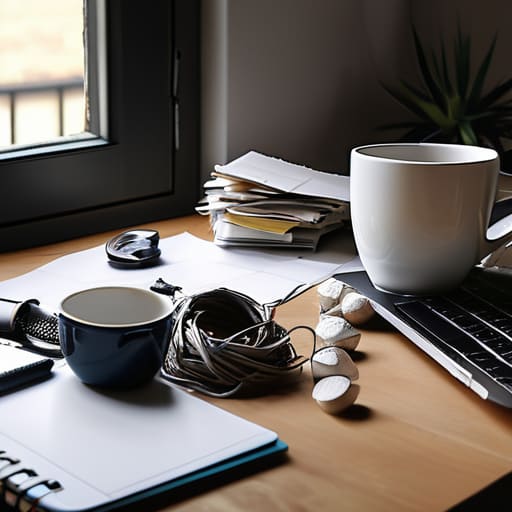
Most of us treat our desks like a dumping ground for everything that doesn’t have a permanent home—half-empty coffee mugs, random charging cables, and that stack of mail you’ve been avoiding for three days. When your physical space is a chaotic mess, your brain starts to mirror it. You sit down to actually work, but instead, you spend twenty minutes just trying to find a pen or clearing enough space to rest your laptop. This isn’t just “clutter”; it’s a constant cognitive drain that makes improving home office productivity feel impossible.

To fix this, you need to stop reacting to the mess and start implementing some actual workspace organization hacks. I’m not talking about buying a $50 aesthetic organizer that just ends up holding more junk. I mean creating zones. Keep your “active” tools—like your notebook, laptop, and a glass of water—within arm’s reach, and move everything else into a drawer or a bin. By minimizing desk distractions through physical boundaries, you stop the mental spiral before it even starts. If it doesn’t help you complete the task in front of you, it shouldn’t be on the surface.

The No Nonsense Guide on How to Build a Productive Workspace

The No Nonsense Guide on How to Build a Productive Workspace

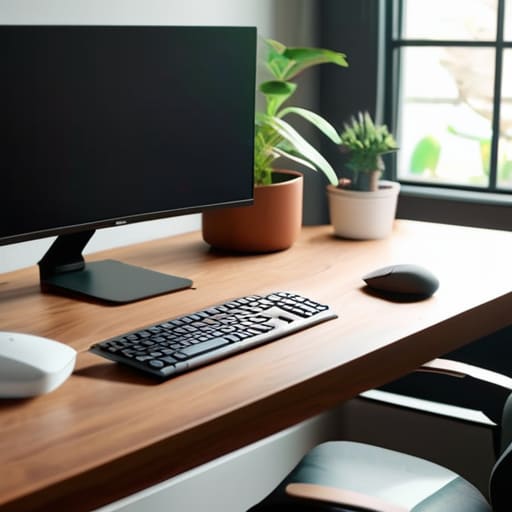
First, let’s talk about the physical stuff. You don’t need a $2,000 designer chair to get things moving, but you do need to stop slouching like a question mark. I’m a huge believer in basic ergonomic office setup tips—like making sure your monitor is at eye level so you aren’t killing your neck by 2 PM. If you’re working from a kitchen chair, grab a firm cushion. It’s not about aesthetics; it’s about making sure your body doesn’t revolt halfway through a deep-work session.

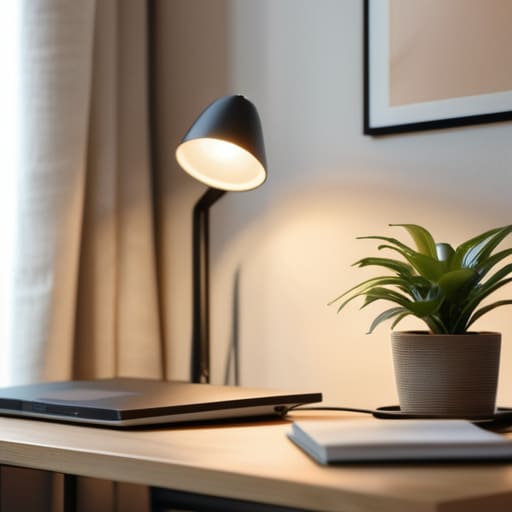
Next, we need to tackle the sensory side of things. I’ve learned the hard way that lighting dictates my mood more than I care to admit. If you’re hunched under a single, flickering overhead bulb, your brain is going to feel as tired as your eyes. Try to position yourself near natural light or invest in a decent desk lamp to find that optimal lighting for focus. Once the light is right, the next step is ruthless: clear the visual noise. If it doesn’t help you complete a task, it shouldn’t be in your line of sight.

Mastering Ergonomic Office Setup Tips Without the Fancy Price Tag

Mastering Ergonomic Office Setup Tips Without the Fancy Price Tag

Look, I get it. You see these $1,200 ergonomic chairs and “smart” standing desks all over TikTok, and suddenly you feel like your setup is a joke. But here’s the truth: you don’t need to drain your savings to stop your neck from feeling like it’s being held together by sheer willpower. Most ergonomic office setup tips you find online are just ways to sell you more gear. Instead, focus on the physics of your body. If your monitor is too low, grab a stack of those old textbooks you never read and use them as a riser. If your feet don’t touch the floor, a sturdy box works just as well as a designer footrest.

It’s really about aligning your joints so you aren’t fighting your furniture all day. Pay attention to your elbows—they should be at a 90-degree angle, not hovering awkwardly in mid-air. Also, don’t sleep on the power of optimal lighting for focus. If you’re working under a harsh overhead light that makes you feel like you’re in a hospital, or if you’re squinting in a dark corner, your productivity is going to tank. Position yourself near a window or grab a cheap desk lamp to soften the glare. It’s about small, intentional adjustments that save your spine and your sanity.

Minimizing Desk Distractions Through Radical Workspace Organization Hacks

We’ve all been there: you sit down to finally crush that project, but then you notice a stack of mail, a stray charging cable, or a half-empty coffee mug from yesterday. Suddenly, your brain is more focused on the clutter than the actual work. To actually succeed at minimizing desk distractions, you have to stop treating your surface like a junk drawer. I’m a big believer in the “one-touch” rule—if you pick something up, put it exactly where it belongs immediately. Don’t just move the mess to a different corner; clear it out.

When it comes to workspace organization hacks, less is almost always more. I keep my immediate reach zone strictly limited to my laptop, a notebook, and my water bottle. Everything else—the pens, the external hard drives, the fidget toys—needs a designated “home” in a drawer or a small desktop organizer. If it doesn’t serve a direct purpose for the task at hand, it’s just visual noise. By clearing the physical landscape, you’re essentially giving your brain permission to actually focus without the constant micro-distractions of a messy environment.

Using Optimal Lighting for Focus and Essential Desk Accessories

Let’s talk about the stuff that actually affects your brain chemistry: light and touch. Most of us default to that one harsh overhead light that makes everything feel like a fluorescent-lit interrogation room, but that is a fast track to a headache. If you want to nail optimal lighting for focus, you need layers. I’m a big fan of a dedicated desk lamp with a warm, adjustable bulb. It creates a “task zone” that tells your brain it’s time to lock in, rather than just drifting through the day. If you can position your setup near a window for natural light, do it—just watch out for that afternoon glare that makes you want to squint until your eyes ache.

Once your lighting is dialed in, don’t overlook the small, tactile things. You don’t need a massive budget for essential desk accessories for focus, but you do need tools that reduce friction. I’m talking about a decent oversized mouse pad to smooth out your movements, a dedicated tray for the random pens and paperclips that usually migrate into your workspace, and maybe a small plant to break up the tech-heavy vibe. It’s about creating a sensory environment that feels intentional rather than accidental.

Five Small Systems to Keep Your Focus from Spiraling

  • Stop the “junk drawer” mentality by designating one single, specific spot for every single cord and gadget; if it doesn’t have a home, it’s just clutter waiting to derail your afternoon.
  • Implement a “reset ritual” at the end of every workday where you clear your desk back to zero, so you aren’t walking into a mess of yesterday’s stress the next morning.
  • Use a physical timer—not your phone—to time your deep work sprints, because once you pick up that device to check a notification, your focus is officially dead.
  • Curate a “sensory toolkit” for your desk, like a specific candle or a certain lo-fi playlist, that acts as a psychological trigger to tell your brain it’s time to actually work.
  • Audit your digital desktop as much as your physical one; if your computer screen is a chaotic graveyard of random screenshots and unfiled PDFs, your brain is going to feel just as cluttered.

The TL;DR on a Functional Workspace

Stop chasing “aesthetic” setups that don’t actually work; prioritize ergonomics and lighting that keep you from feeling like a zombie by 3 PM.

Build systems, not just piles—organize your desk so that everything has a specific home, which stops the “where is my charger?” spiral before it starts.

Protect your focus by aggressively removing visual and digital clutter, because a messy desk is just a physical manifestation of a distracted brain.

Building Your System, One Step at a Time

At the end of the day, creating a productive workspace isn’t about buying every aesthetic gadget you see on a Pinterest board or spending a month perfecting your cable management. It’s about the small, intentional shifts—the way you position your monitor to save your neck, how you curate your lighting to keep the afternoon slump at bay, and how you ruthlessly clear the clutter that triggers your brain to spiral. We’ve covered everything from ergonomic hacks that won’t break your bank account to the radical organization needed to keep distractions out of your line of sight. It’s about building a functional ecosystem that supports your work instead of fighting against it. When you stop treating your desk like a temporary crisis zone and start treating it like a purpose-built tool, everything changes.

Please remember that your workspace is a living thing; it’s going to change as your projects change and as your life evolves. You don’t need to get it perfect on day one, and you definitely don’t need to achieve some impossible standard of “minimalist perfection” to be effective. Just focus on reducing the friction. If a certain setup makes your morning transition into deep work feel slightly less chaotic, you’ve already won. Adulthood is messy, but your environment doesn’t have to be. Take these systems, tweak them until they feel right for you, and just start building.

Frequently Asked Questions

I live in a tiny studio apartment—how do I set up a workspace without it taking over my entire living area?

The “studio apartment struggle” is real. When your bed is three feet from your laptop, your brain never truly clocks out. My rule? Use visual cues to create boundaries. If you can’t afford a separate room, use a folding screen or even a rug to “zone” your office area. When the workday ends, physically pack your tech into a dedicated bin or drawer. If you can’t see the work, you can actually relax.

What do I do if my "workspace" is just my kitchen table or a corner of my bedroom?

Look, I get it. Most of us aren’t sitting in a dedicated home office with a mahogany desk. If your “office” is the kitchen table or a corner of your bedroom, the goal is psychological separation. When you’re done working, clear the laptop and the notebooks away completely. If you can’t move the desk, use a specific lamp or a dedicated desk mat to signal to your brain: “We are in work mode now.”

How do I know when my setup is actually working versus when I'm just obsessing over aesthetic desk decor?

Look, there’s a fine line between a setup that inspires you and one that’s just a glorified Pinterest board. The litmus test is simple: Does your gear actually help you finish a task, or are you spending forty minutes adjusting a candle and rearranging your monitor just to avoid starting your work? If you feel more paralyzed by the “vibe” than empowered by the tools, you’re decorating, not organizing. Focus on friction, not aesthetics.

Page 4 of 4

Powered by WordPress & Theme by Anders Norén