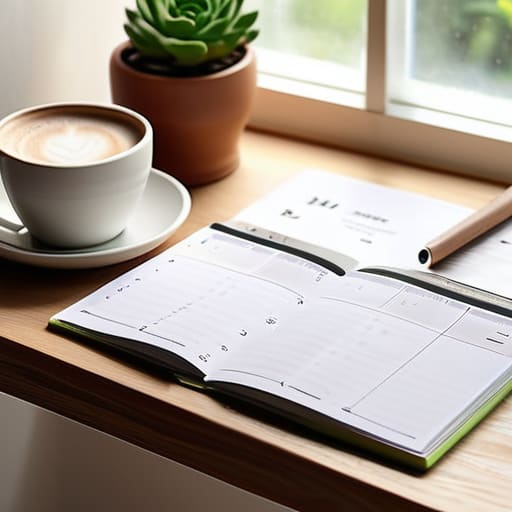
I used to think that if I didn’t spend three hours every Sunday night color-coding a digital planner with aesthetic stickers and custom fonts, I was somehow failing at being an adult. There is so much gatekeeping around “productivity culture” that makes it feel like you need a PhD in organization just to schedule a grocery run. But honestly? Most of those high-maintenance systems are just performative busywork that actually adds more friction to your life instead of removing it. I realized that real weekly planning isn’t about creating a perfect, Pinterest-worthy masterpiece; it’s about building a basic roadmap so you stop waking up on Tuesday feeling like you’re already behind.
I’m not here to sell you on a complicated lifestyle overhaul or a $50 planner that you’ll abandon by mid-February. My goal is to give you the unpolished, actual steps I use to keep my freelance life from spiraling into total chaos. We’re going to strip away the fluff and focus on a few repeatable systems that actually work for real people with messy schedules. By the end of this, you’ll have a way to manage your time that feels calmly efficient rather than like another chore on your to-do list.
Table of Contents
- Ditch the Chaos Why Weekly Planning Ends the Emergency Mode
- The Sunday Reset Routine for People Who Hate Overthinking
- Real Productivity Systems for Professionals Who Need Actual Results
- Stop Guessing Setting Weekly Goals That Actually Stick
- Mastering Time Management Techniques and Organizing Daily Tasks
- 5 Low-Friction Ways to Keep Your Plan From Falling Apart
- The TL;DR: How to Actually Make This Work
- The Bottom Line
- Frequently Asked Questions
Ditch the Chaos Why Weekly Planning Ends the Emergency Mode

The reason most of us feel like we’re constantly drowning isn’t that we’re lazy; it’s that we’re reacting instead of acting. When you wake up without a roadmap, you aren’t actually choosing how to spend your day—you’re just letting your inbox and random notifications choose for you. This is how you end up in that frantic “emergency mode,” where you’re working ten-hour days but somehow still feel like you’ve accomplished nothing.
By incorporating a solid Sunday reset routine, you’re essentially building a buffer between yourself and the chaos. Instead of waking up Monday morning wondering which fire to put out first, you’ve already done the heavy lifting of organizing daily tasks and mapping out your priorities. It’s about moving away from frantic, last-minute scrambling and toward a more intentional rhythm. When you take twenty minutes to look at the week ahead, you stop being a passenger in your own life and start actually driving. It turns that overwhelming mountain of “to-dos” into a series of manageable, bite-sized steps that won’t leave you feeling burnt out by Wednesday.
The Sunday Reset Routine for People Who Hate Overthinking

Look, I’m not about that “aesthetic” lifestyle where you spend four hours journaling with a matcha latte. If you’re anything like me, that sounds like a chore, not a reset. My version of a Sunday reset routine is much more about low-effort logistics than deep spiritual awakening. I keep it to a tight 30-minute window: I clear my physical desk, scan my inbox for any lingering fires, and look at my calendar to see where the landmines are hiding. It’s less about perfection and more about reducing the cognitive load before Monday morning actually hits.
The goal here isn’t to build some complex productivity system that you’ll abandon by Wednesday. Instead, I focus on organizing daily tasks into three simple buckets: non-negotiables, maybe-if-I-have-time, and quick wins. I also use a few specific weekly reflection prompts to check in with myself, like “What actually drained my energy last week?” and “What’s one thing I can automate?” This keeps me from repeating the same mistakes and helps me stop reacting to my life and start actually steering it.
Real Productivity Systems for Professionals Who Need Actual Results

Once you’ve done your Sunday reset, you need a way to actually execute without staring blankly at a massive to-do list. Most productivity systems for professionals are way too bloated—they involve complex color-coded calendars and apps that take more time to manage than the work itself. Instead, I swear by time blocking. Rather than just writing “work on project” on a sticky note, I carve out specific chunks of my day for deep work and separate blocks for the inevitable “quick” emails that always derail my focus.
The trick is to stop treating your tasks like a giant, undifferentiated pile of stress. I find that organizing daily tasks into three categories—must-do, should-do, and if-I-have-time—keeps me from burning out by Tuesday. If you try to tackle twenty high-priority items at once, you’re just setting yourself up for a mid-week meltdown. Pick your big wins, protect those time blocks, and let the rest of the noise happen in the margins. It’s about working with your energy, not fighting against it.
Stop Guessing Setting Weekly Goals That Actually Stick
The biggest mistake I see people make is treating their to-do list like a wish list. You sit down with your coffee, feel ambitious, and write out fifteen massive tasks. By Tuesday, you’re overwhelmed, you’ve abandoned the list, and you’re back to reacting to whatever email just popped up. To avoid this, you have to stop treating every task like an emergency. When setting weekly goals, I follow a strict “Rule of Three.” I pick three big-picture objectives that actually move the needle on my career or personal life, and everything else is just supporting noise.
If a goal feels too heavy, it’s probably because it’s actually a project in disguise. Instead of writing “Fix my finances,” which is vague and terrifying, try “Review last month’s subscriptions.” It’s about breaking things down into manageable chunks so you don’t freeze up when you look at your planner. This is where effective organizing daily tasks becomes a superpower; you aren’t just guessing what to do next, you’re executing a pre-vetted plan that you already know is realistic.
Mastering Time Management Techniques and Organizing Daily Tasks
Once you’ve got your goals set, you have to actually face the day-to-day grind without losing your mind. This is where most people stumble—they have a big-picture vision but zero idea how to handle the actual organizing daily tasks part. I used to think I just needed more willpower, but it turns out I just needed better time management techniques. Instead of staring at a massive, intimidating to-do list, I started using time-blocking. I carve out specific chunks of my day for deep work and leave small gaps for the inevitable “quick questions” or emails that pop up. It keeps you from feeling like you’re constantly reacting to everyone else’s agenda.
To make this stick, you need a way to audit whether your system is actually working or if it’s just more clutter. This is where weekly reflection prompts become your best friend. Every Friday or Sunday, ask yourself: What actually got done? and Where did my time leak away? It’s not about being a perfectionist; it’s about spotting the patterns so you can tweak your approach for next week. If you spent three hours scrolling because you didn’t have a clear next step, that’s just data for your next reset.
5 Low-Friction Ways to Keep Your Plan From Falling Apart
- Stop over-scheduling your hours. If you fill every single 30-minute block with a task, you’re going to burn out by Tuesday. Leave “buffer zones”—empty slots in your calendar for when a meeting runs long or you just plain need a coffee break.
- Use the “Rule of Three.” Every morning, pick three non-negotiable things you need to get done. Everything else is just a bonus. This keeps you from staring at a massive to-do list and feeling paralyzed.
- Audit your energy, not just your time. I’ve learned that I’m useless at deep work after 4 PM, so I stopped scheduling heavy projects then. Save the mindless admin stuff—like answering emails or filing receipts—for when your brain is hitting a wall.
- Keep your tools simple. You don’t need a $50/month productivity app with twenty different integrations. Whether it’s a physical notebook or a basic digital calendar, if the system is too complicated to maintain, you won’t use it.
- Do a “Friday Closeout.” Spend ten minutes every Friday afternoon clearing your desk and jotting down where you left off. It prevents that Sunday night dread because you aren’t walking into a mess on Monday morning.
The TL;DR: How to Actually Make This Work
Stop aiming for a “perfect” aesthetic schedule; focus on building a system that actually accounts for your real-life energy levels and inevitable distractions.
Use your Sunday reset to clear the mental clutter so you aren’t starting Monday morning already feeling behind the eight ball.
Consistency beats intensity every single time—it’s better to have a messy, five-minute weekly check-in than a two-hour planning session that you only do once a month.
The Bottom Line
Look, we’ve covered a lot of ground here, from ditching the Sunday scaries to actually setting goals that don’t just sit there gathering digital dust. At the end of the day, weekly planning isn’t about becoming some hyper-optimized productivity robot or filling every single minute of your calendar with “deep work.” It’s really just about building a reliable safety net so that when life inevitably gets messy—a deadline shifts, a friend needs you, or you just plain feel burnt out—you aren’t starting from zero. You’ve got your systems, you’ve got your priorities, and most importantly, you’ve got a roadmap to stop the constant firefighting.
If you’re feeling overwhelmed right now, just start small. You don’t need a complete lifestyle overhaul by Monday morning; you just need one hour to look at the week ahead and decide what actually matters. Adulthood is far too heavy to carry without a little bit of structure, but once you find a rhythm that works for you, everything starts to feel a lot less like a crisis and a lot more like intentional living. You’ve got this. Now, go grab your planner (or your notes app, I don’t judge) and take back your time.
Frequently Asked Questions
What do I do if my week completely falls apart by Tuesday and my plan becomes useless?
First of all, take a breath. This happens to me all the time, and it doesn’t mean your system failed; it just means life happened. When Tuesday turns into a dumpster fire, stop trying to force the old plan. It’s dead weight now. Instead, do a “micro-reset.” Grab a scrap of paper, list the three absolute non-negotiables left for the week, and let everything else slide. Pivot, don’t panic.
How much time should I actually spend on this—I don't want it to become another chore on my list.
Honestly, if it takes you two hours, you’re overcomplicating it. Aim for 20 to 30 minutes. That’s it. I treat it like a quick coffee break, not a deep-dive audit of my entire soul. If you spend more time planning than actually doing the work, the system is broken. Keep it lean: look at your calendar, pick your top three priorities, and get out. The goal is to save time, not waste it.
Do I really need a fancy digital planner, or can I just use a basic notebook and some scribbles?
Honestly? You don’t need a $40 digital planner with color-coded stickers to get your life together. If a cheap spiral notebook and a black pen work for you, stick with that. The best system is always the one you actually use, not the one that looks prettiest on your desk. Don’t let “aesthetic productivity” become another chore. Just grab a pen, scribble down your priorities, and start executing. Keep it simple.